

Get Informed for Free and Without Obligation — We Guarantee the Best Price and Coverage
▷ Health Insurance ⭐


“Without a doubt, the best. Very friendly and punctual on the call. They gave me accurate information about health insurance. Thank you so much! ”
Jose Muñoz Blanco
“They called me at the time I requested, great service, the health insurance enrollment was easy, and at a price lower than what I’m currently paying. ”
Alba Navarro Pérez

Presbyopia and Health Insurance in Spain in 2026
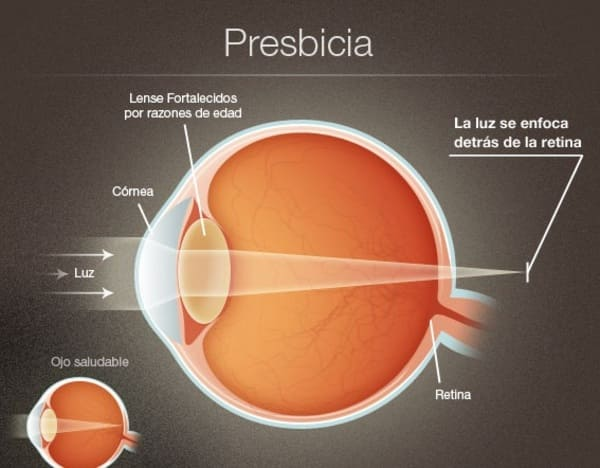
Presbyopia, or eye fatigue, is defined as a decrease in physical ability, meaning the inability to focus effectively.
It is not a disease, but rather the ability of the lens to focus correctly on objects at various near distances. The lens changes in curvature and thickness due to the ciliary muscle.
Over the years, the ability to adapt has gradually but consistently decreased. Starting at around 40 years of age, symptoms begin to appear without other refractive errors.
Due to blurred images, the difficulty in performing tasks that require near vision is what we call presbyopia or eye fatigue.
The primary factor is the loss of elasticity of the lens. This happens because the lens grows throughout life, with new layers compressing the previous ones, causing it to harden. Secondly, the contractility of the ciliary muscle also decreases.
Symptoms of Presbyopia in Spain
Generally, presbyopia or eye fatigue will be noticed when reading small print or focusing on nearby objects becomes difficult, requiring objects to be moved farther away to see them clearly (hence, many people refer to this as “long-arm syndrome”).
Additionally, people with this eye condition may experience other symptoms of presbyopia, such as occasional headaches and eye fatigue.
Presbyopia can be accompanied by refractive errors like myopia, astigmatism, or hyperopia.
The object must be moved away to see it better. A sensation of the text dancing, blurry letters, or visual fatigue.
When headaches occur, observe carefully for an extended period. Redness, dryness, tingling, tearing, and stiffness can occur with prolonged use of myopia.
Presbyopia and Health Insurance in Spain
All of these symptoms of eye fatigue can cause visual fatigue.
How to Solve the Symptoms of Presbyopia in Spain
Clearly, presbyopia affects our lives and can cause many problems. The most common solution is to visit an optician to get special glasses for presbyopia (called myopia glasses), or opt for surgery to correct tired vision.
In the latter case, there are two technologies to achieve this: the implantation of the latest generation of multifocal intraocular lenses and laser treatment (hybrid vision).
After assessing the specific conditions of the patient in a pre-operative consultation, the ophthalmologist will decide which surgery is most suitable for the patient.
The diagnosis of presbyopia and health insurance in Spain is solely determined by the ophthalmologist. In most cases, this is determined through a full pupil dilation exam to identify how much this visual anomaly affects us.
Currently, experts recommend two more effective and quicker methods to correct the effects of this vision problem: implantation of intraocular lenses or laser surgery or combined vision.
Causes of Presbyopia in Spain
The lens is the part of the eye responsible for focusing light reflected from an object, and the closer the object is, the greater the flexibility required.
When the lens hardens due to aging, it can no longer change its shape to focus on close-up images, so the light doesn’t focus on the retina but rather exceeds it. As a result, nearby objects and text appear blurry.
As an age-related condition, presbyopia in Spain generally develops gradually, and its severity worsens over time.
Presbyopia is not related to the shape of the eyeball, which is the cause of other conditions (like myopia or hyperopia), but occurs when the lens becomes thicker and less flexible and cannot focus clearly.
The light entering the cornea does not converge on the retina but rather behind it, which can cause blurry images and stress on the eyes as they try to focus more effectively.
Changes in the muscles surrounding the lens can also contribute to this condition.
Treatment of Presbyopia in Spain
Optical correction: Glasses are the most common option and different types of lenses can be used depending on the needs of each patient. Generally, between the ages of 40 and 60, due to the development of tired vision, prescription needs are regularly updated.
- Single-vision lenses: Used only to correct myopia, typically for specific tasks like reading or sewing.
- Bifocal lenses: Combine distance vision (upper part of the lens) and near vision (lower part).
- Professional lenses: The upper part of the lens is for medium-distance vision, and the lower part is for short-distance vision. These are especially suitable for those who spend a lot of time in front of a computer.
- Progressive lenses: The prescription gradually changes to correct myopia, medium vision, and hyperopia. Contact lenses can also be used and should be tailored to each patient.
Surgical correction: Advances in refractive surgery now allow for correction of presbyopia, reducing patients’ dependency on glasses or contact lenses.
- Laser surgery: Involves reshaping the cornea to change its curvature and increase the focal depth to compensate for the loss of adaptability of the lens.
- Intracorneal lens implants: These do not have refractive power (i.e., they do not change the refractive power) but, like lasers, overcome the difficulty of focusing myopia by affecting the curvature of the cornea.
- Intraocular lens implant: Replaces the lens with a pseudolens (single-focus or multifocal), which can perform its functions more effectively after a certain age. This is the same procedure used in cataract surgery.
Diagnosis of Presbyopia in Spain
Presbyopia is diagnosed through basic ophthalmological exams, including refractive assessments and eye health checks.
A refractive assessment can determine if the person is nearsighted (myopic), farsighted (hyperopic), has astigmatism, or presbyopia. Your doctor may use several instruments and ask you to assess your nearsightedness and distance vision through multiple lenses.
During an eye health check, the ophthalmologist may drop eye drops to dilate the pupils. A few hours after the test, you may experience increased sensitivity to light. Pupil dilation allows the doctor to better view the inside of the eye.
Presbyopia and Health Insurance in Spain recommends that adults undergo eye exams periodically:
- Adults under 40 should be examined every 5 to 10 years.
- Every 2 to 4 years between the ages of 40 and 54.
- Every 1 to 3 years between the ages of 55 and 64.
- Every 1 or 2 years after 65.
If you have risk factors for eye diseases, require glasses or contact lenses, you may need more frequent checkups.
Best Health Insurance for Presbyopia Coverage in Spain
In Spain, several insurers offer health insurance with coverage for presbyopia, although the extent and type of treatment covered can vary significantly depending on the policy. Some of the top insurers offering ophthalmological coverage and treatments for presbyopia include:
- Sanitas: One of the most recognized insurers in Spain, offering coverage for ophthalmological consultations and necessary diagnostic tests to detect and monitor presbyopia. Some of its more comprehensive plans, like Sanitas Más Salud Plus, may cover surgical treatments like laser surgery for refractive defects, including presbyopia. However, this coverage usually comes with a waiting period.
- Asisa: Asisa also offers extensive ophthalmology coverage. Plans like Asisa Salud Óptima include consultations and eye exams, as well as discounts on glasses and contact lenses. In some cases, refractive surgery may be available through co-payment or optional coverage that can be added to the basic plan.
- Adeslas: Adeslas covers ophthalmological care from the first consultation. While laser surgery may not always be included, clients can access discounts and preferential rates for advanced treatments like presbyopia surgery. Adeslas has a network of partnered clinics and opticians that offer additional services to their insured clients.
- DKV Seguros: DKV is another option to consider, especially for its focus on comprehensive health and prevention. Plans like DKV Integral offer coverage for eye exams and visual tests, along with discounts on optical services. Laser surgery for presbyopia is usually available, depending on the type of policy.
- Mapfre Salud: Known for its flexibility in the services covered, some Mapfre plans allow optional coverage for refractive surgery, providing a comprehensive solution for those seeking to correct presbyopia through surgery.
It’s important to compare policies and review waiting periods, exclusions, and limitations, as well as check whether the insurance covers glasses or surgical treatments, to choose the option that best suits your visual needs.
Are there exclusions in medical insurance for the treatment of presbyopia in people over 40 years old?

Exclusions in medical insurance for the treatment of presbyopia (a condition affecting most people over 40) can vary depending on the policy and insurer. However, some common exclusions you may encounter include:
- Specific surgical treatments: Some policies may not cover procedures like laser surgery or lens replacement surgery, as they are considered elective or cosmetic treatments.
- Corrective lenses: While the diagnosis of presbyopia may be covered, some policies do not cover the cost of glasses, contact lenses, or progressive lenses, or may only cover them partially.
- Pre-existing conditions: If presbyopia was diagnosed before purchasing the insurance, some plans may exclude treatment for this condition.
- Experimental or non-conventional treatments: New or less common procedures to correct presbyopia may not be covered if the insurance considers them experimental.
It is important to review your policy’s terms and conditions or consult your insurer for more precise information on specific exclusions related to presbyopia.
How long is the waiting period for treatments related to presbyopia in medical insurance?
The waiting period in medical insurance is the time that must pass from the purchase of the policy until the insured can access certain treatments or services. For treatments related to presbyopia, this waiting period can vary depending on the insurer and the type of coverage.
In general, medical insurers may apply a waiting period for non-urgent or elective treatments, such as laser surgery to correct presbyopia. This waiting period is typically between 3 to 12 months, depending on the policy. During this period, the insured will not be able to receive specific treatments, like eye surgery, if presbyopia is considered a pre-existing condition or a non-urgent health issue.
Many insurance policies do cover ophthalmological consultations and diagnostic tests from the start of the policy, even without a waiting period. However, for more advanced or costly procedures, like surgeries, it is more common to find temporary restrictions.
It’s advisable to carefully review the terms and conditions of the insurance to understand which treatments are subject to a waiting period and how long you must wait before accessing them.
What treatments for presbyopia are covered by private health insurance in Spain?
In Spain, private health insurance generally covers several aspects of the diagnosis and treatment of presbyopia, although the exact coverage depends on the type of policy purchased. In general, private health insurance covers ophthalmological consultations and diagnostic tests necessary to detect presbyopia, such as vision checkups or visual acuity measurements. These services are usually available without restrictions, making it easier to get an early diagnosis.
Regarding treatments, coverage for glasses or contact lenses to correct presbyopia is more limited. Some policies offer partial reimbursements or discounts at partnered opticians, but rarely cover the full cost of corrective lenses.
Surgical treatments for presbyopia, such as laser surgery (LASIK or PRK) or intraocular lens implants, may be covered under certain policies, but not all. These interventions are often considered elective treatments, so it is common to find waiting periods or partial coverage for costs.
Additionally, some more comprehensive policies may include visual rehabilitation programs or visual therapy, although this is not standard. It is always advisable to carefully review the terms of your policy to understand which treatments are included.
Prevention of Presbyopia in Spain
As we’ve mentioned, presbyopia is an age-related process for the eyes. It’s something we can’t completely stop, but we can delay and minimize its effects.
Therefore, it is recommended to limit the effects of ultraviolet rays and sunlight through the following methods:
Glasses with filters, a diet rich in omega-3 and low in omega-6, home exercises to stimulate accommodation, and basic exercises for each type.
Vision therapy for specific conditions. Our experience in such therapies allows us to prevent the development of presbyopia.
Complications of Presbyopia in Spain
According to the Spanish Ophthalmology Association, in addition to the decrease in vision quality, surgery also carries serious risks, which can affect the eye’s function and integrity. The most serious risks include endophthalmitis (intraocular infection) and excessive bleeding. Other risks include:
- Burns from incisions, leakage wounds, excessive bruising, rupture of the posterior capsule, capsule detachment, capsule obstruction syndrome, phimosis, dislocation of the intracapsular intraocular lens, miosis, iris hernia, loose iris syndrome.
For pupil obstruction syndrome, iris dialysis, the lens falls into the vitreous cavity, and after surgery,
Increased intraocular pressure, uveitis, posterior capsule opacity (and associated risks with YAG capsulotomy), and a slight increase in the risk of retinal detachment.
Common issues also include chronic dry eye and a high incidence of eye pain, often due to lens removal and nerve terminations being cut during surgery. Part of the reason for this is age-related dryness.
Long-term effects can counteract the potential benefits of using glasses or contact lenses.
Health Insurance and Presbyopia Surgery in Spain
Surgery for presbyopia patients in Spain, once the disease progresses, is crucial, and having insurance that covers surgery is essential. At MejorSeguroMedico.es, we work with the best ophthalmology specialists and the top health insurers in Spain. Our health policies not only cover surgery for presbyopia but also for other eye diseases and multiple conditions. By simply filling out our form, you can get the best advice at no cost and a 35% discount on each policy.
We Help You Find the Best Health Insurance for You or Your Loved Ones

At MejorSeguroMedico.es, we want to protect and take care of your health. You can get your health insurance up to the age of 84. It’s designed to offer the best health coverage for you or your loved ones. ✅ We Guarantee the Best Price and Coverage Based on Your Specific Needs. Get Informed for Free and Without Obligation.