

Get Informed for Free and Without Obligation — We Guarantee the Best Price and Coverage
▷ Health Insurance ⭐


“Without a doubt, the best. Very friendly and punctual on the call. They gave me accurate information about health insurance. Thank you so much! ”
Jose Muñoz Blanco
“They called me at the time I requested, great service, the health insurance enrollment was easy, and at a price lower than what I’m currently paying. ”
Alba Navarro Pérez

Lipomas and Health Insurance in Spain in 2026
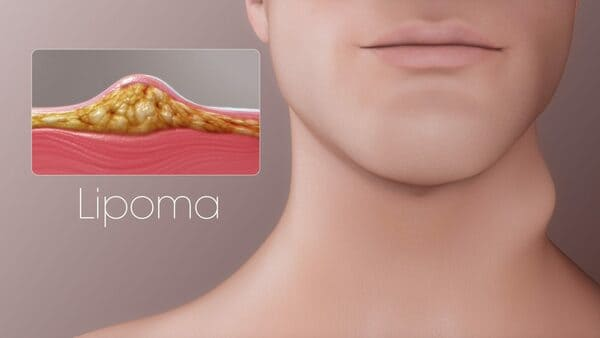
Lipomas are generally harmless lumps. They can appear in various parts of the body, especially on the trunk and extremities. Since they are tumors, discovering one can cause alarm. However, they are usually not a serious medical problem. They can even heal without treatment. But because their appearance can be quite common, we offer information to help you identify them.
Does my health insurance cover the diagnosis and treatment of lipomas in Spain?
In Spain, the diagnosis and treatment of lipomas can be covered by health insurance, both in the public and private systems, depending on the patient’s medical situation.
In the National Health System (SNS), the diagnosis and treatment of lipomas are covered when there are medical reasons to justify it. A lipoma is a benign fat tumor that usually does not cause serious health issues. However, if the lipoma is painful, increases abnormally in size, or affects nearby structures (like nerves or muscles), the doctor may recommend its removal. In these cases, both the consultation with the specialist, diagnostic tests (like ultrasounds or biopsies), and surgery are typically covered. If the lipoma poses no medical risk and the patient wishes to remove it for aesthetic reasons, it is unlikely the public system will cover the procedure.
For private health insurance, coverage varies depending on the policy. Many insurers cover the removal of lipomas if there is a medical issue, but they may not include surgery if the reason is purely cosmetic. It is important to review the policy details to understand the limitations.
Does my policy include consultations with specialists like dermatologists or surgeons to treat lipomas?
The coverage of a health insurance policy for consultations with specialists, such as dermatologists or surgeons, to treat lipomas depends on the specific conditions of each policy. In many private health insurances in Spain, consultations with specialists are typically included, especially if there is a medical referral justifying the need to evaluate the lipoma.
For example, if a primary care doctor determines that the lipoma needs to be evaluated by a specialist, such as a dermatologist or surgeon, it is likely that the consultation will be covered by the insurance. However, the level of coverage may vary depending on the type of policy. Some policies may require the patient to pay a co-payment for the consultation, while others might cover it entirely.
If the lipoma requires surgical treatment, the intervention may be included if there are medical reasons, such as rapid growth, pain, or risk of complications. However, if the consultation with the specialist is purely for cosmetic reasons, the policy may not cover either the consultation or the treatment. It is advisable to carefully review the policy’s terms to understand the exact details of the coverage.
What diagnostic tests are covered by health insurance to determine if a lipoma needs treatment (ultrasounds, biopsies, etc.)?
Health insurance, both in the public system and private insurance in Spain, typically covers the necessary diagnostic tests to determine if a lipoma requires treatment, provided there is a medical justification. Lipomas, though benign, may need evaluation if they cause discomfort, grow rapidly, or interfere with nearby structures.
The most common tests for diagnosing a lipoma include:
- Ultrasound: A non-invasive test that uses sound waves to create images of soft tissues. This is usually the first step to assess the size, shape, and depth of the lipoma. In most cases, ultrasounds are covered by health insurance, as they help differentiate between a lipoma and other potential masses.
- Biopsy: If the doctor suspects that the lipoma may be malignant or has atypical characteristics, a biopsy may be requested. This procedure involves taking a tissue sample to be analyzed in the lab. Biopsies are also typically covered by insurance if they are necessary to confirm the diagnosis and rule out other conditions, such as liposarcoma.
- MRI: In more complex cases or if the lipoma is deep, the doctor may request an MRI to obtain detailed images. This type of test is usually covered by insurance as long as there is a clear medical indication.
Are there limitations to health insurance coverage if the treatment of lipomas is for aesthetic reasons?
In private health insurances, there are significant limitations to coverage for the treatment of lipomas if the reason is purely aesthetic. Lipomas are benign fat tumors that, in most cases, do not pose a health risk. Therefore, when a patient requests the removal of a lipoma solely to improve their appearance, most private health insurance policies will not cover the procedure.
The main criterion for private health insurance to cover the removal of a lipoma is that there is a medical justification, such as pain, rapid growth, discomfort, or interference with the functioning of nearby organs or structures. In these cases, both diagnosis and surgery are usually covered. However, if the reason for removal is purely cosmetic, many policies exclude this type of intervention.
Some more comprehensive or specialized policies may offer options to include aesthetic procedures, but this typically involves an additional cost or supplemental insurance. Therefore, it is important for policyholders to carefully review the terms of their policy to understand the limitations and see if there is any coverage option for aesthetic treatments like the removal of lipomas for non-medical reasons.
Is there a waiting period before my health insurance covers the removal of lipomas?
In private health insurance in Spain, it is common to have a waiting period before certain treatments or procedures, such as the removal of lipomas, are covered. The waiting period is the time that must pass from the start of the insurance contract until the policyholder can access certain coverages, especially those related to surgical procedures or higher-cost treatments.
The duration of the waiting period may vary depending on the policy, but it usually ranges from 3 to 12 months. If the removal of the lipoma is considered medically necessary, such as in cases where the tumor causes pain, grows rapidly, or affects bodily functions, the policy will likely cover the procedure once the waiting period has passed. However, if the lipoma is removed for cosmetic reasons, it is possible that the insurance will not cover the treatment, even after this period.
Some insurers may reduce or eliminate the waiting period if the policyholder is switching from another health insurance provider or if they have maintained continuous coverage with another insurer. It is advisable for policyholders to carefully review their policy to understand the details of the waiting period and how it affects the coverage of lipoma removal.
Are there exclusions related to aesthetic treatments for lipomas in my policy?
In most private health insurance policies, there are exclusions related to aesthetic treatments for lipomas. These exclusions refer to the lack of coverage when the removal of a lipoma is done purely for cosmetic reasons and not for a medically justified need. Lipomas are benign fat tumors that, in general, do not pose a health risk. However, some people choose to remove them for aesthetic reasons, such as improving appearance or preventing the visible growth of the lump.
The aesthetic exclusion in policies means that if the lipoma does not cause pain, discomfort, or affect the functionality of nearby organs or structures, the policy will not cover either the consultation with specialists or the surgical treatment to remove it. This exclusion is common in health insurance, as aesthetic treatments are not considered essential from a medical perspective.
However, some policies offer the option to add coverage for aesthetic procedures. This may involve an additional cost or the purchase of supplemental insurance. Therefore, it is recommended to carefully review the terms of the policy to understand the exclusions and possible coverage options for aesthetic treatments like lipoma removal for non-medical reasons.
What is a lipoma?
A lipoma is a benign tumor made up of fat tissue. This fat mass is located in the hypodermis or subcutaneous tissue. In other words, it is located between the skin and muscles, not visible. It grows slowly. When touched, they feel soft and squishy. In Spain, approximately 1% of people are affected. It is most common in people aged 40 to 60 years. It is very rare for it to appear in children. Its size is not standard. It can be as small as a pea or grow as large as a grapefruit. They are usually painless. They most commonly appear on the thighs, abdomen, back, and arms. In exceptional cases where they cause discomfort and pain, removal is recommended.
Causes of Lipomas in Spain
The exact causes of these fat masses are unknown. However, evidence seems to indicate that heredity plays a role. In other words, their origin is genetic. This means that if one of the parents has developed lipomas, their children may have them. There are cases where multiple members of the same family develop lipomas. Lipomas can also appear after an injury.
Risk Factors for Lipomas in Spain
There are several reasons why lipomas may develop. They are not determining factors, but they do influence. These are:
- Age between 40 and 60 years. Lipomas can develop at any age. However, they are more frequent within this age range. Perhaps factors like sedentary lifestyle and fat tissue accumulation contribute.
- Genetic factors. It is common for these fat masses to appear in several members of the same family.
- It has also been shown that there is a higher predisposition to develop lipomas if the person suffers from certain diseases, typically related to adipose tumors that can be confused with lipomas. These diseases include:
- Madelung’s Disease: Characterized by the appearance of fatty lumps or mature fat tumors. It is also known as lipomatosis.
- Gardner’s Syndrome: A genetic disease characterized by intestinal polyps and osteomas.
- Dercum’s Disease: An inherited condition marked
We Help You Find the Best Health Insurance for You or Your Loved Ones

At MejorSeguroMedico.es, we want to protect and take care of your health. You can get your health insurance up to the age of 84. It’s designed to offer the best health coverage for you or your loved ones. ✅ We Guarantee the Best Price and Coverage Based on Your Specific Needs. Get Informed for Free and Without Obligation.